
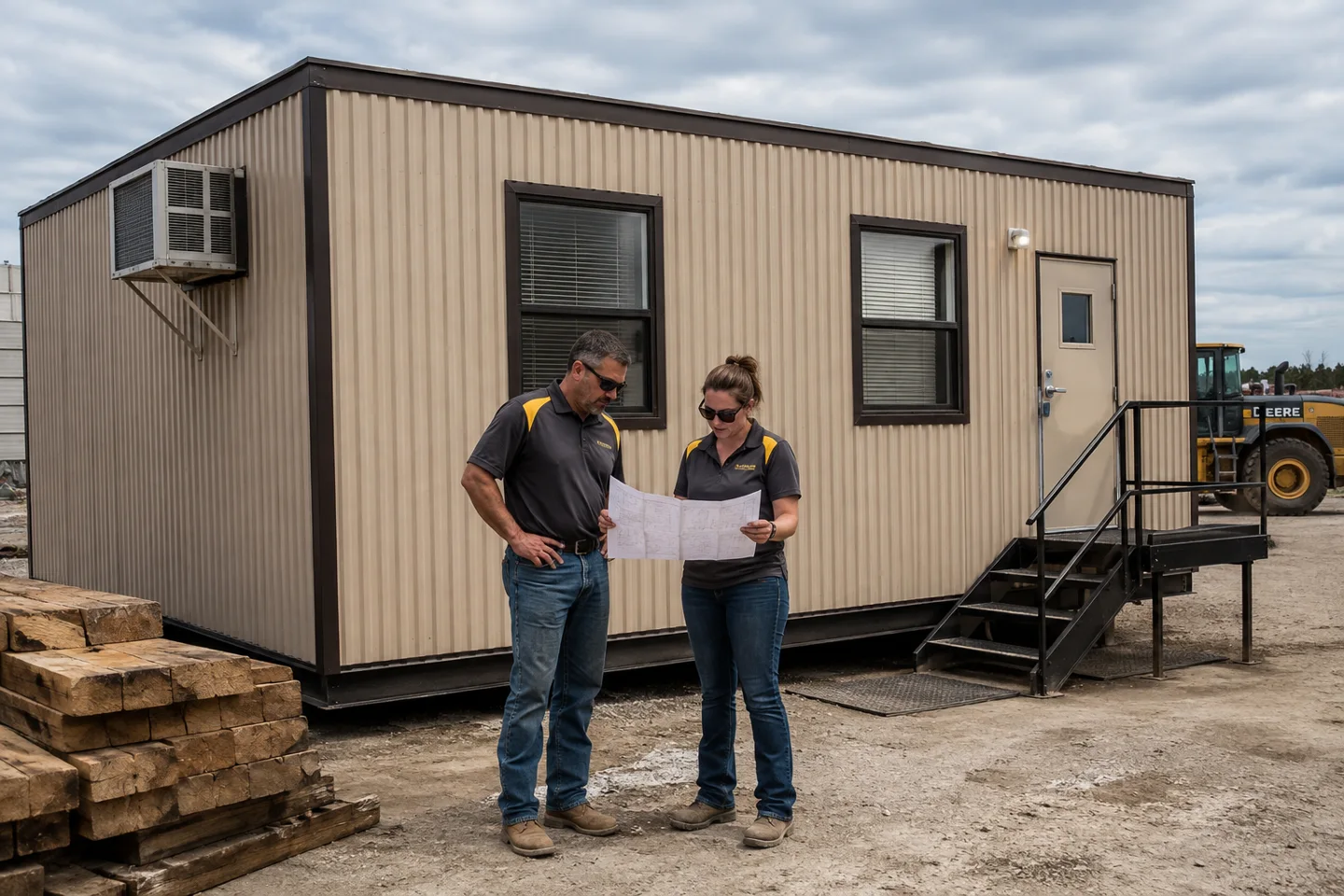
Budget a long-term mobile office lease by combining recurring charges with delivery, installation, services and eventual removal over the expected period of use. Leasing can avoid buying a building for a temporary requirement, but it does not eliminate operating costs. The agreement should explain extensions, maintenance and what happens when the project finishes.
Separate startup costs from recurring charges
Build the opening budget around the actual placement: delivery, supports or installation, entrance equipment and service connections. Include any furnishings or alterations in the proposal. These costs can be missed when the first comparison focuses entirely on the monthly building rate.
Then list the recurring building charge, equipment rentals, utilities, communications and any other contracted services. Confirm whether the rate is calendar-monthly or every four weeks. Those periods produce different annual totals, so use the supplier’s actual billing schedule when comparing offers.
The mobile office utilities guide helps distinguish the building’s fittings from active site services. A restroom, for example, does not establish that its connection work is included. Record who provides each part of the finished arrangement.
Price the project you expect—and a longer one
Use three scenarios: an early finish, the planned duration and an extension. Ask about minimum payments, termination notice, renewal rates and collection timing. A changing construction program or delayed renovation can keep an office in use longer than the original schedule.
For a business comparing Des Moines mobile offices during a renovation, the practical question is what it costs to keep staff working if the permanent office opens late. That is a planning example, not a promise that one rental term suits every renovation.
Compare an available 12x44 mobile office with a larger configuration only where the layout requires it. Paying for unused rooms throughout a long lease can be more significant than a modest difference in delivery charges.
When should you compare buying instead?
Purchase deserves review when the requirement is stable and you expect continuing or repeated use. Include maintenance, future moves, storage and eventual disposal in that comparison. Do not assume a resale value or a universal break-even month; the actual offers and your future use determine the result.
Our office leasing comparison includes an initial rental planning chart and a framework for comparing ownership. For either choice, keep a separate allowance for responsibilities excluded from the supplier’s package and identify who will manage them.
Request long-term office prices with your layout, location and expected term. Ask for the extension and end-of-project costs alongside the opening price so the budget covers the whole commitment.