
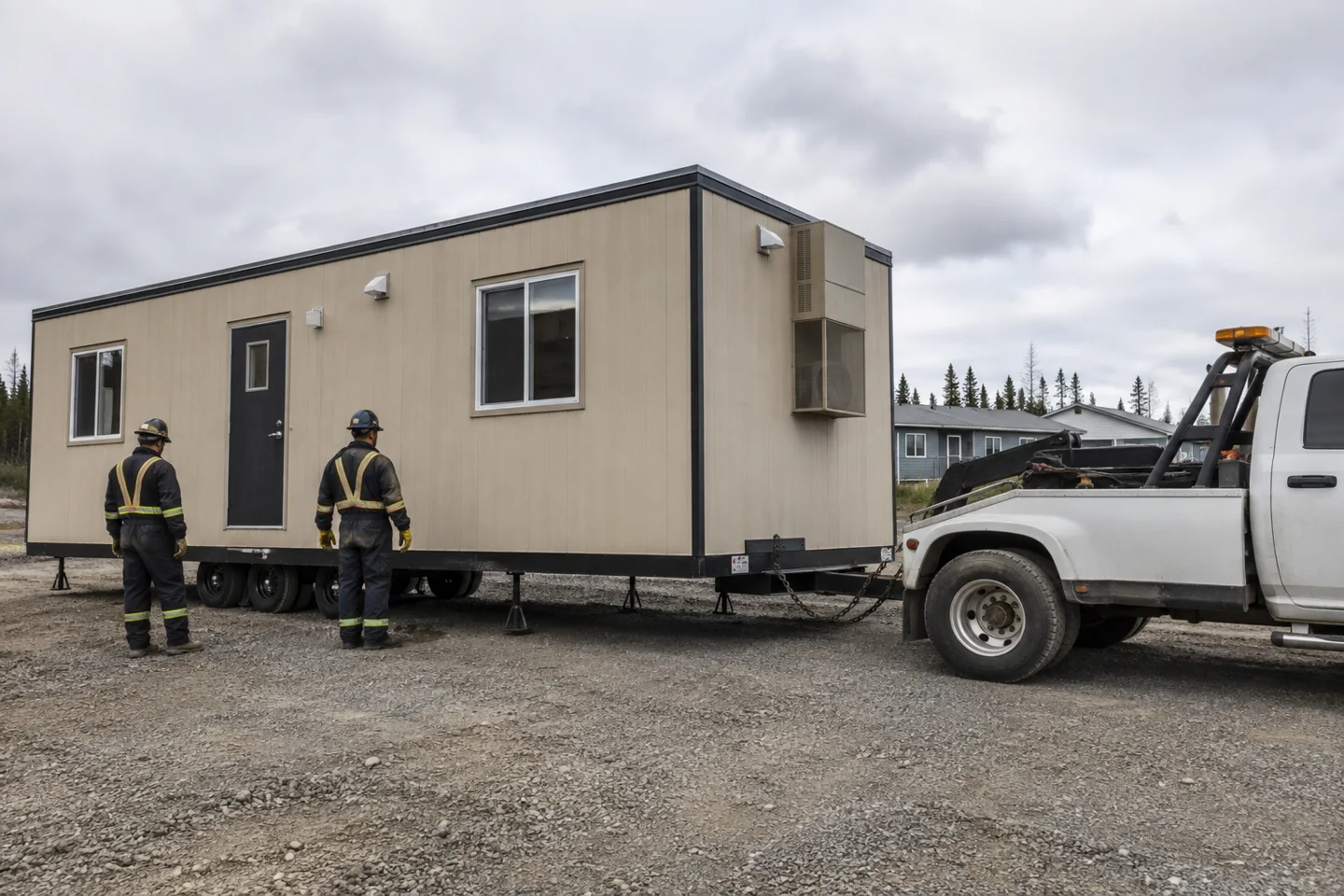
Rent, Lease or Buy a Mobile Office Trailer
Should you rent, lease or buy a mobile office trailer? The best choice depends on the project term, the office size, future use and the complete delivered cost. Compare the same mobile office, floor plan, condition and installation scope under each available option. A monthly rental payment cannot be compared fairly with a purchase price unless delivery, setup, maintenance and removal are included.
National helps buyers compare mobile office trailer rental, leasing and purchase options. Start with the mobile office size and floor plan your team needs, then request written proposals for the same location and schedule.
When to Rent a Mobile Office Trailer
Renting a mobile office trailer is often practical for a defined construction project, renovation, seasonal operation or temporary expansion. A rental can provide the workspace without requiring your company to store, resell or relocate an owned building after the work ends.
Ask about the minimum rental term, billing period, extension rate, deposit, maintenance responsibility and return conditions. Price the mobile office rental with delivery, installation, steps or ramps, utilities and collection. Confirm what begins and ends billing so the proposal reflects the actual occupancy period.
When to Lease a Mobile Office Trailer
A longer mobile office lease may fit a project with a stable multi-month or multi-year requirement. Compare the lease term with realistic schedule extensions. Review early termination, renewal and maintenance terms before treating a lower recurring rate as the lower total cost.
For construction office trailer leasing, include the expected project completion date and a delayed-finish scenario. For a temporary business office, include the date permanent space should become ready. The best lease proposal explains the building, term, delivery scope and return responsibility in one place.
When to Buy a Mobile Office Trailer
Buying a mobile office trailer deserves consideration when the building will serve repeated projects or a long-term location. Ownership can support future use, but it also brings responsibility for condition, repairs, storage, relocation and eventual sale. Compare a new or used mobile office trailer for sale with the work required before occupancy.
Inspect the actual office trailer and confirm its floor plan, roof, floor, heating and cooling equipment, electrical system and prior modifications. Include delivery and installation in the purchase proposal. If the building will later move to another project, budget that relocation rather than treating it as free.
Compare Mobile Office Rental and Purchase Costs
| Cost factor | Rent or lease | Buy |
|---|---|---|
| Initial commitment | Deposit, opening rental and mobilization | Purchase price, delivery and installation |
| Ongoing cost | Recurring charge through the rental term | Maintenance, repairs and site costs |
| Project extension | Extension rate and notice terms apply | No rental extension, but operating costs continue |
| End of use | Disconnection, return condition and collection | Reuse, store, relocate or sell the office |
Calculate rental across the expected term, then add transport, installation, accessories, utilities and removal. For purchase, add the equipment price, transport, setup, maintenance and future relocation or disposal. Compare a shorter term, the expected term and a delayed project before deciding.
Get Mobile Office Rental, Lease and Purchase Prices
Provide the delivery address, dates, intended use and required floor plan. Ask providers to quote the same mobile office size, condition and services. That produces a useful rent-versus-buy comparison instead of unrelated prices.
Compare mobile office trailers for rent, lease or sale. Request mobile office prices now →