
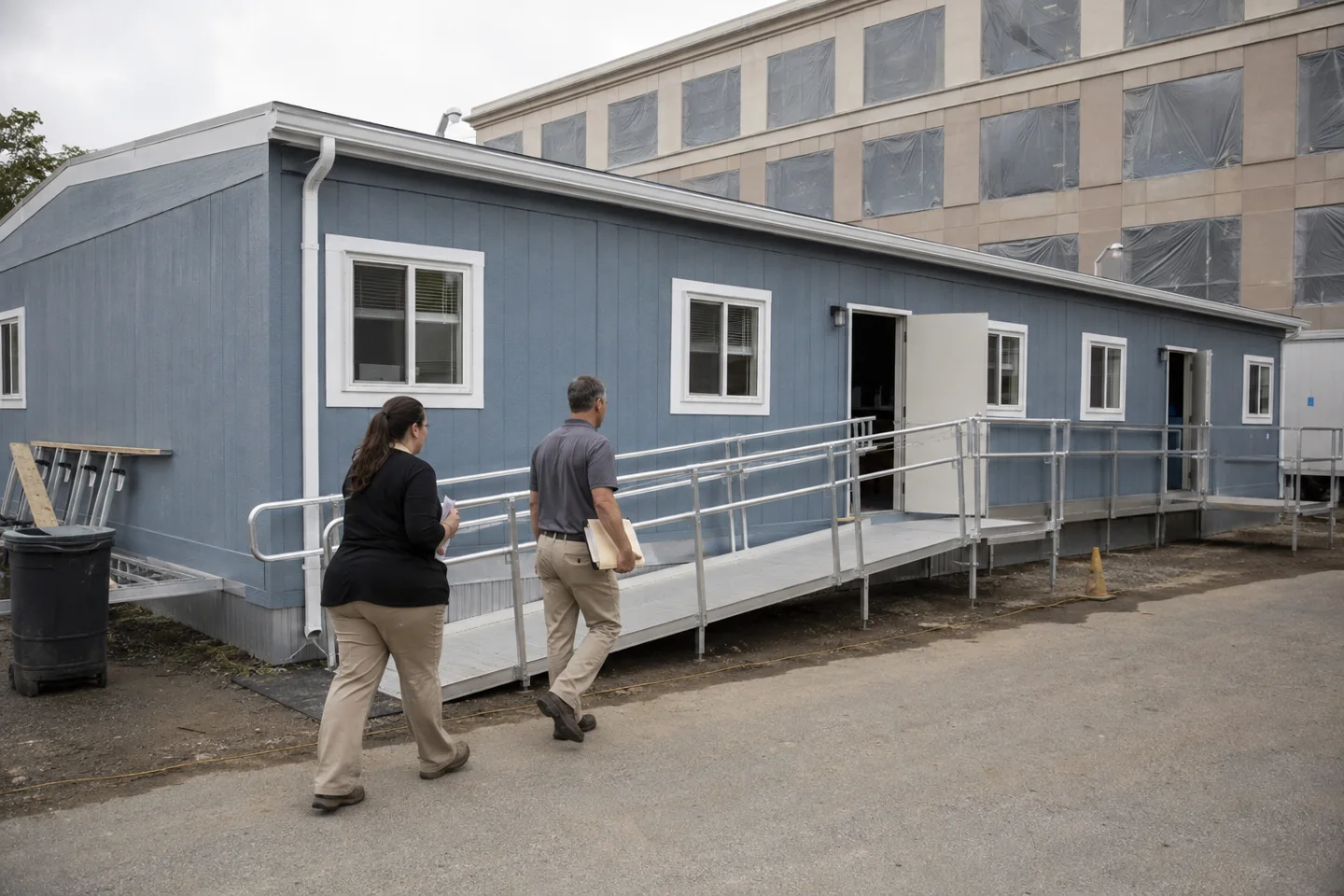
A mobile office trailer may require local placement, building or other approvals, depending on its location, use and installation. Do not assume that wheels, temporary use or a short rental term remove those requirements. Start with the authority responsible for the property and explain the intended activity before ordering the building.
Describe the actual use
A construction management office, public-facing sales office and teaching building can be reviewed differently. Tell the reviewing authority who will occupy the space, how long it will remain and which services will be connected. Include whether the building is supporting an existing permitted project or establishing a separate use on the property.
For portable classrooms or childcare, ask which additional program or occupancy requirements apply. Avoid selecting an ordinary office trailer first and assuming the intended activity can be approved later. The correct design decision depends on the use, not merely the supplier’s product name.
Prepare the information reviewers will need
Ask for a list of required documents. It may include a site plan, building information, placement details, utility arrangements and the proposed entrance route. The supplier can identify available documentation for the offered unit, but local site submissions may require other professionals or the property owner.
Show the building in relation to parking, neighboring structures and access. Include the ramp or stair footprint rather than drawing only the trailer rectangle. Utility and access work can extend beyond the building itself, and the full installation should be considered together.
Separate building approval from site approval
Documentation for a manufactured or modular building does not necessarily complete approval for placing it on a particular property. Ask which parts of the process concern the unit and which concern its installation and use. Clarify who is submitting each item, paying fees and responding to questions.
The federal accessibility standards are a useful reference for applicable access planning. They do not replace the project’s complete review or establish that a particular rented building and site arrangement are approved.
Allow time before committing to occupancy
Request the approval sequence before setting the move-in date. Delivery, connections and inspections may need to happen in a particular order. If the office is part of a tight construction schedule, identify the approvals that must be resolved before dispatch to avoid paying for equipment that cannot yet be used.
When you request mobile office options, include the property location, intended use and any requirements already supplied by the authority. That information helps National’s provider comparison focus on suitable buildings. It also makes exclusions in the delivery and installation quotation easier to recognize.