
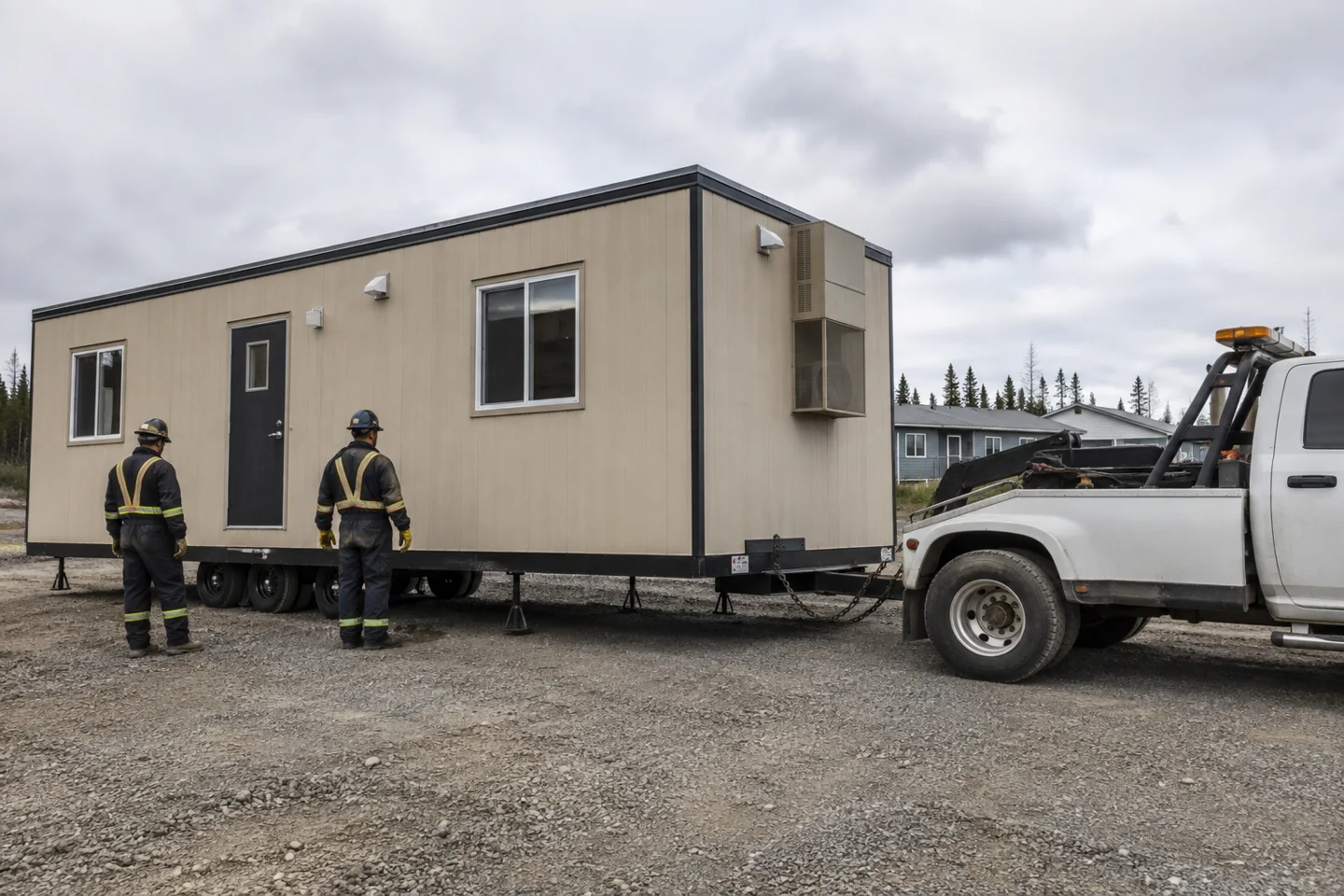
Delivering a mobile office trailer involves confirming the building, checking transport access, preparing the placement area and coordinating installation. The truck’s arrival is not automatically the date the office can be occupied. Utility connections, entrance equipment and required inspections may need to be completed afterward.
Confirm the approach and final position
Send the transporter photographs of the approach and a drawing of the intended location. Identify gates, narrow turns, overhead obstructions, changes in level and soft ground. Ask the company making the delivery to confirm the required clearance and unloading method. A rule of thumb from another trailer or carrier is not a substitute for that review.
Show neighboring equipment and the planned fence layout. The route may be open today but obstructed once another contractor begins work. Decide which deliveries must happen first and preserve the access needed for eventual collection as well as arrival.
Prepare the site before dispatch
Assign responsibility for the placement surface, supports or foundation work, drainage and any required approvals. The building supplier should identify what information it needs and which tasks are excluded from its installation. Resolve those exclusions before scheduling the transporter, rather than expecting the driver to correct an unprepared site.
Multi-section buildings can require additional joining and finishing work. Review the building configuration with the installation scope so a double-wide quotation is not treated as though it were a single trailer placement. Confirm when installers and other trades will attend.
Coordinate the work that follows delivery
The office may need electrical service, internet, plumbing and the entrance system completed by different parties. Give each task an owner and a target date. For a classroom or customer-facing building, include the intended occupancy and applicable review process in that schedule.
Before staff move in, confirm that essential services are working and the entrance is usable. Record the condition of a rental building and identify whom to contact about installation defects or maintenance. The handover should answer practical questions, not simply acknowledge that the unit reached the property.
How much lead time should I allow?
Ask for separate dates for equipment availability, delivery, installation and readiness for occupancy. An available stock unit can still be delayed by site work or approvals. Customized buildings may follow a different schedule. Avoid announcing a firm move-in date based only on an initial availability estimate.
National’s mobile office pricing request should include your required occupancy date and current site readiness. That helps providers explain a realistic sequence and price the actual work, rather than promising a truck arrival that does not solve the space requirement.