
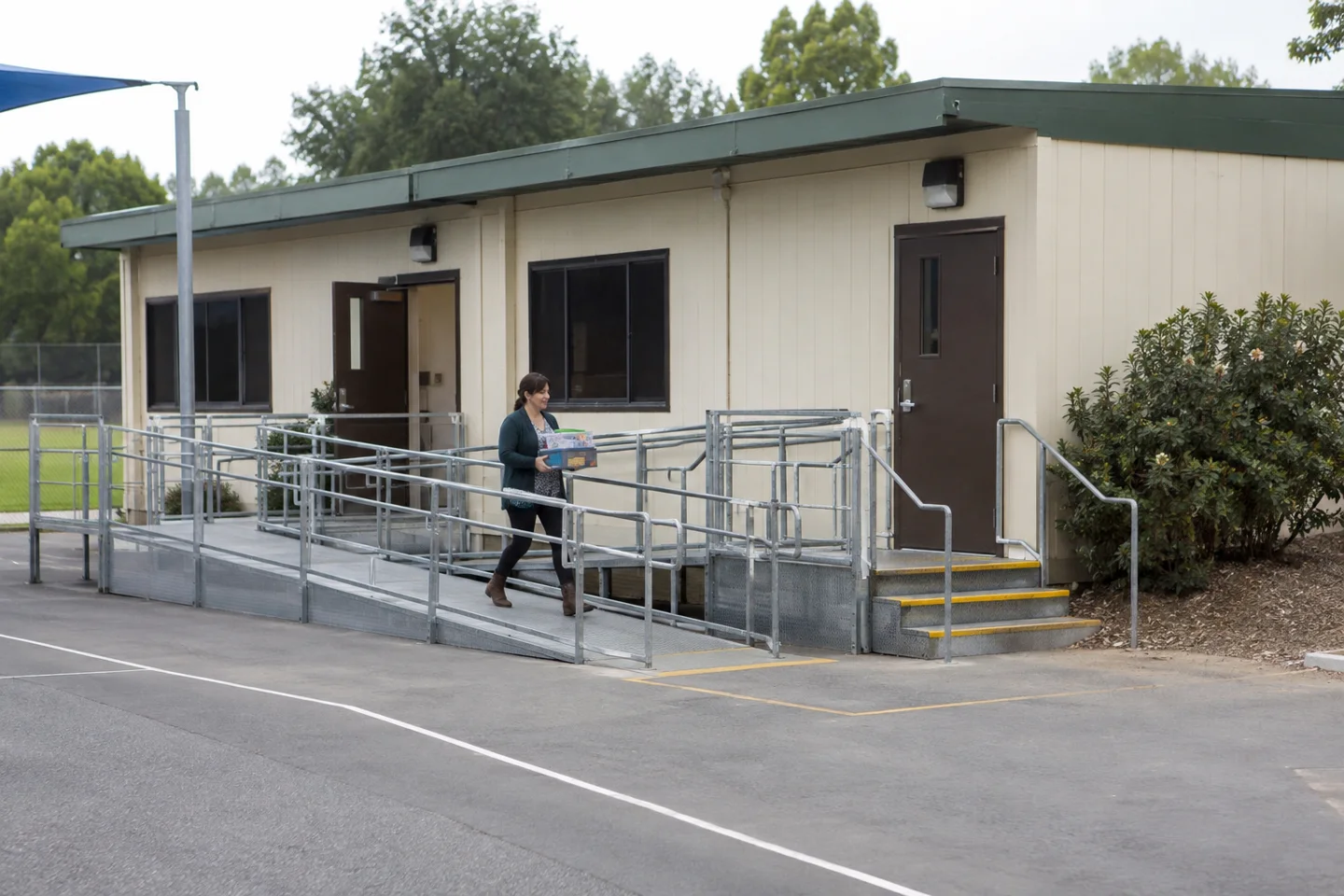
Portable classrooms can provide additional teaching space during enrollment changes, renovations or a temporary program. The building should be selected for the educational use, with an approved layout, appropriate facilities and a practical connection to the campus. An ordinary office trailer is not automatically a suitable classroom.
What classroom features should schools compare?
Start with the program’s activities and required facilities. Identify the teaching area, storage, staff requirements and any specialized equipment. Review the furnished plan with the school team rather than estimating student capacity from exterior dimensions. Circulation, exits and accessibility need to work with the actual arrangement.
A 24x60 mobile classroom is one configuration to discuss, while smaller or larger buildings may suit a different program. Compare available portable classroom buildings using the same requirements so the proposals describe comparable space.
Confirm heating, cooling, power and communications before move-in. A classroom display package should include the necessary mounting and IT coordination, not simply an equipment allowance. Check whether the school or supplier provides furniture and which items remain after the rental ends.
How does a temporary classroom connect to the campus?
Plan the route to existing teaching buildings and shared facilities. Review entrances, classroom access ramps, outdoor circulation and separation from construction activity. For a remote educational program, the utility and transport arrangements may need more work than a placement beside an established school.
Schedule installation around school operations, but allow for approvals and completion work. Delivery is one milestone, not proof that the building is ready for students. The building permit guide helps organize questions for the responsible officials and supplier.
Church teaching programs and daycare uses also need a layout suitable for their activities. Review church and daycare buildings separately where age groups, supervision or facilities differ from an ordinary classroom requirement.
Should a school rent or buy additional classrooms?
Rental can match a defined renovation or temporary program, while purchase deserves review for continuing use. Compare delivery, installation, services, access equipment and removal alongside the building charge. Ask about extension terms if the permanent project is delayed.
Modular construction can allow a range of room arrangements, but later expansion is not automatic. Discuss any planned additional sections or future relocation before selecting the first building. Joining buildings can require design, approval and installation work that belongs in the budget.
Compare portable classroom prices with the program, location and required opening date. Our classroom rental comparison helps evaluate the complete commitment while keeping the educational requirement at the center of the decision.