
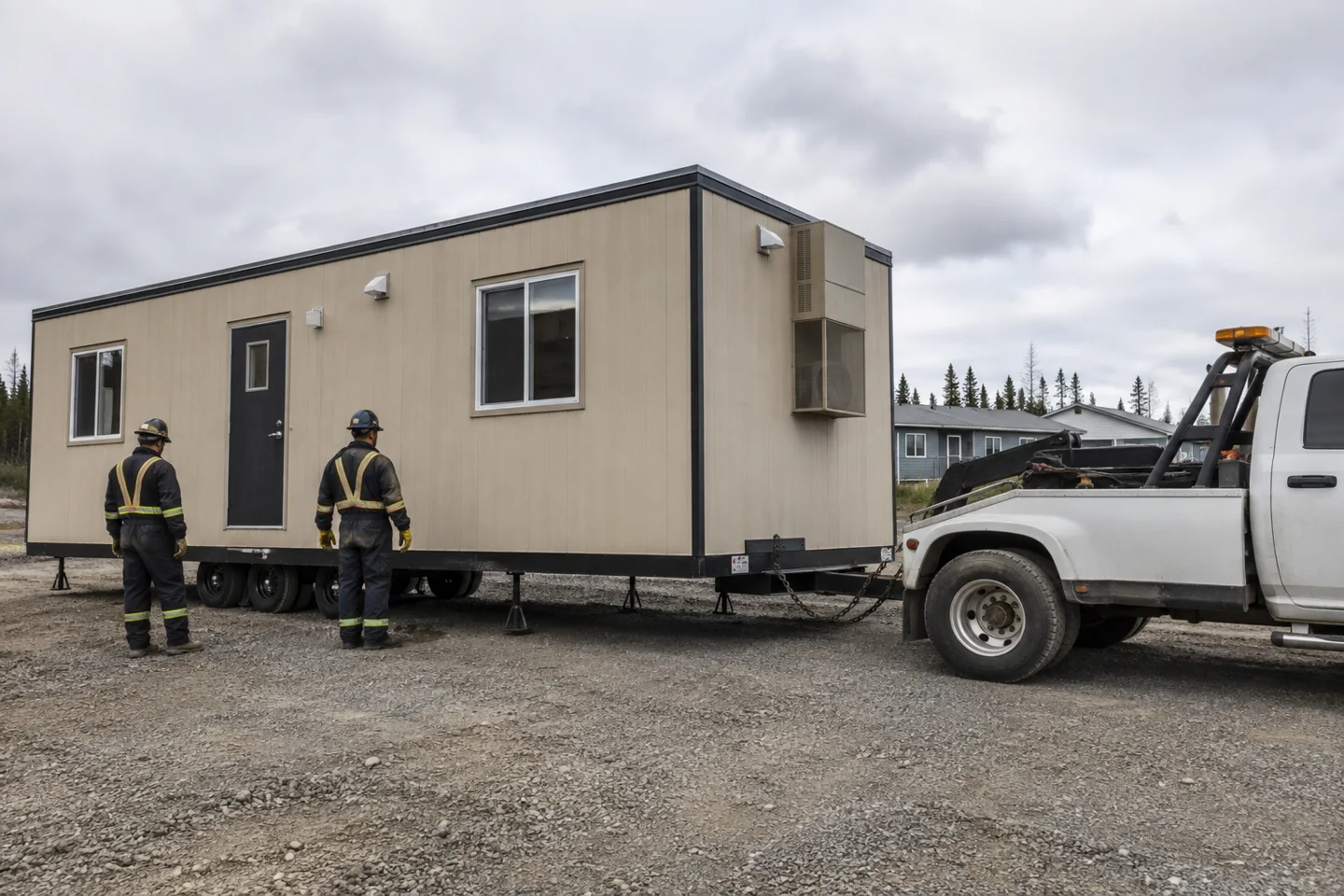
There is no reliable nationwide delivery time for every mobile office rental. Timing depends on an available suitable building, preparation work, transport scheduling and whether your property is ready. Ask for a project-specific sequence with confirmed responsibilities rather than treating a general availability statement as a promised occupancy date.
Distinguish available from ready to occupy
A supplier may have a trailer available while it still needs cleaning, repairs or equipment changes. Transport may need a separate booking. After arrival, installation and utility work can remain. Request the dates associated with each stage so your team understands what the proposed delivery date actually means.
Use our office delivery guide to separate those tasks. If you need staff working by a particular Monday, explain that requirement explicitly. A Friday arrival is not necessarily sufficient when entrance equipment or electrical connections must follow.
Resolve decisions that hold up scheduling
Provide the site address, intended use, preferred layout and expected rental term at the start. Discuss any constraints on transport access or placement. Unresolved questions about office trailer permits or service connections can prevent a realistic schedule even when a building has been identified.
Be clear about which requirements are essential. If you can use several suitable mobile office sizes, ask the provider to compare available alternatives. Do not compromise a necessary classroom or accessibility requirement simply to obtain an earlier delivery slot.
For a school project, work backward from the required teaching date and allow for the school’s own preparation tasks. Furniture, communications and the move from existing rooms all belong in the schedule for portable classroom rental. Confirm who coordinates those tasks rather than leaving them between suppliers.
Agree how schedule changes are handled
Ask when the delivery booking becomes firm and what happens if the property is not ready. Review cancellation, rescheduling and rental-start terms in writing. A delay can affect both transport charges and paid rental time, so the apparent convenience of an early booking should be weighed against actual readiness.
Set a final site-readiness check before dispatch and identify one contact authorized to coordinate changes. Keep the transporter and installation team working from the same access information. For a phased project, establish extension options rather than relying on the initial completion estimate.
Request mobile office availability with your required working date and site details. Providers can then explain which building options and preparations fit the schedule, rather than offering a generic delivery estimate disconnected from the project.