
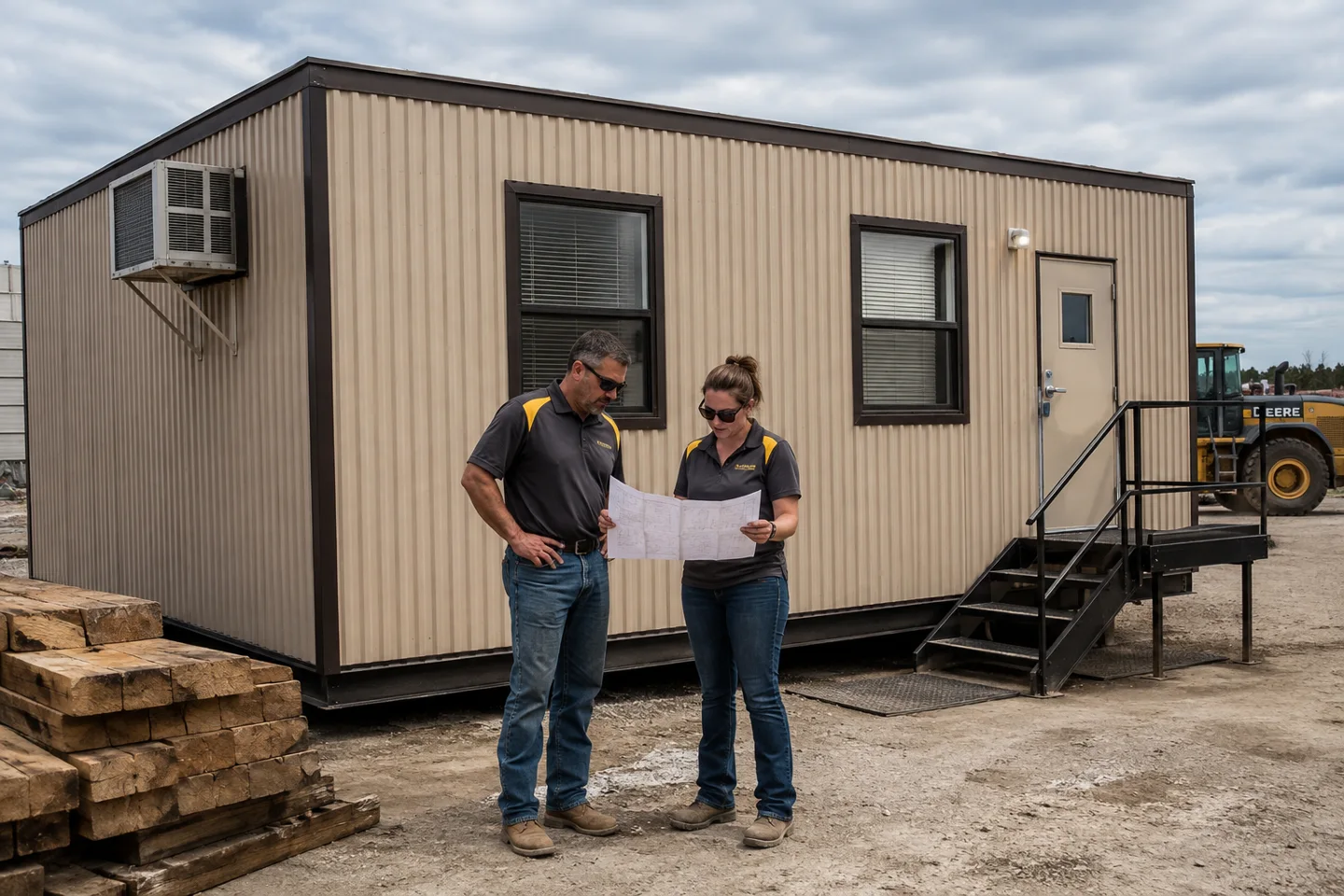
A mobile office can support a remote construction project by placing administration, communications and coordination close to the work. The building must be planned with its delivery approach and services. Distance from an established utility connection or repair team can matter as much as the floor plan when choosing a rental.
What should you tell the office trailer supplier?
Provide the exact placement location, approach photographs and any site restrictions. Explain gates, turns, grades and the surface the transport equipment will use. Ask the provider to review access rather than assuming a road used by ordinary pickups can accommodate the proposed building delivery.
For rough or changing ground conditions, arrange the appropriate site preparation before dispatch. A mobile office is not made suitable for uneven terrain simply by being transportable. Supports, installation and drainage need to be addressed for the actual site. Our office trailer delivery guide outlines the responsibilities to clarify.
How do remote offices get utilities and internet?
Start with the building’s electrical requirements and the equipment your team will use. Identify the available supply and have the responsible contractor design the connection. If temporary generation is proposed, ask who supplies, services and operates it. Avoid assuming backup power is included with the office.
Test communications coverage where the building will stand and review the workload with your service provider. Drawings, video meetings and cloud systems can demand more than basic email. Our mobile office internet answer separates the building wiring from an active service plan.
Include water and wastewater arrangements if a restroom is required. Review heating and cooling for the season and operating hours. Each service needs an assigned owner and a practical response plan if it stops working.
Which layout and rental terms support remote work?
A 12x44 mobile office may offer a useful mix of private and shared space, while a larger double-wide project office can be considered for several functions. Compare furnished plans rather than relying on a general capacity label.
Keep documents, communications equipment and ordinary office storage organized so the building remains useful during busy periods. Plan separate material storage and visitor access. Additional rooms are only helpful if staff can reach and use them without disrupting the primary work.
Ask about service response, extension terms and eventual collection at the remote address. Compare office leasing costs including transport and installation, not just the recurring rate. Get remote office pricing with the delivery conditions and utilities plan included so providers can explain a workable arrangement.